Choosing a shredding company sounds simple until you actually start comparing services.
One company quotes a low price over the phone. Another talks about containers, scheduled routes, certificates of destruction, and on-site service. Someone else offers to pick everything up and take it somewhere else for processing. If you are responsible for company records, employee files, customer information, financial documents, or old computer equipment, those differences matter.
At RW Lone Star Security, we have been handling secure information destruction for government agencies, professional offices, healthcare-related businesses, financial organizations, small companies, and larger commercial facilities for more than 14 years. One thing we have learned is that the best shredding program is not necessarily the one with the lowest price per box.
It is the one that fits how your business actually handles confidential information.
A good Paper Shredding Service should make the process easier for your staff, reduce the chance of sensitive information being mishandled, and give you a clear record showing that the material was properly destroyed.
Here is what we recommend looking at before choosing a provider.
Start With What You Actually Need Shredded
Before comparing shredding companies, take a quick inventory of what your organization is generating.
Most businesses immediately think about paper records, but confidential information can be sitting in several places.
We regularly see offices with old personnel files in storage rooms, banker boxes from previous accounting years, customer records that nobody is sure they are allowed to throw away, and old hard drives stacked in an IT closet because someone deleted the files but never destroyed the physical drives.
A law office may have closed case files. A medical practice may have outdated patient paperwork. A construction company might have payroll records, employee information, insurance documents, and job-site paperwork.
A property management company could have applications containing Social Security numbers, credit reports, banking information, and copies of identification.
The first step is deciding what needs secure destruction and what can go through normal recycling.
When there is any doubt, we usually recommend treating the material as confidential.
Once confidential documents are mixed into regular trash or open recycling containers, control over that information is gone.
Decide Whether You Need a Purge or Ongoing Service
One of the biggest differences between shredding programs is frequency.
Some businesses simply need purge shredding.
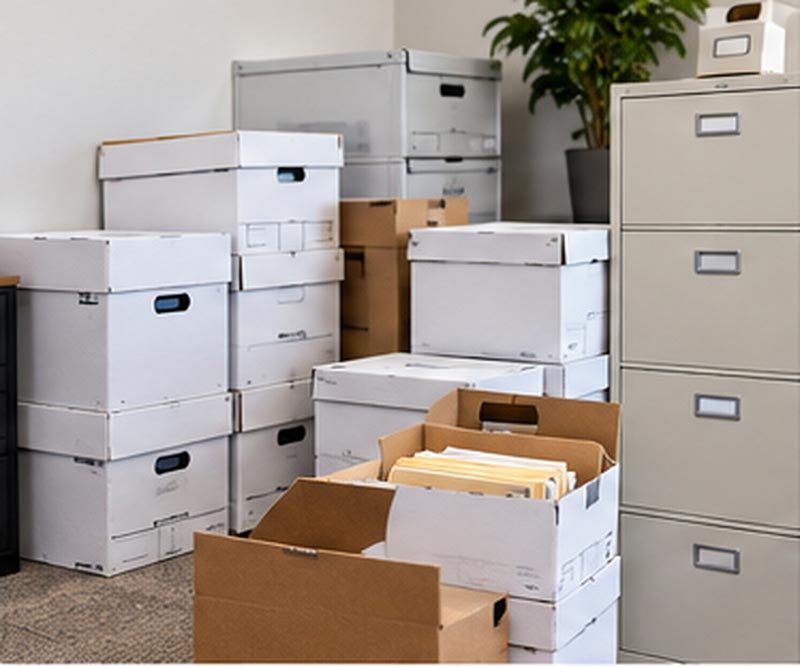
A purge is usually a larger one-time cleanout. We might arrive at an office where a company has 40 banker boxes from a storage room, several filing cabinets being cleared out, or years of paperwork accumulated before an office move.
Those jobs are very different from a company that fills one or two secure containers every few weeks.
For businesses producing confidential documents throughout the month, a monthly paper shredding service or another recurring schedule usually works better.
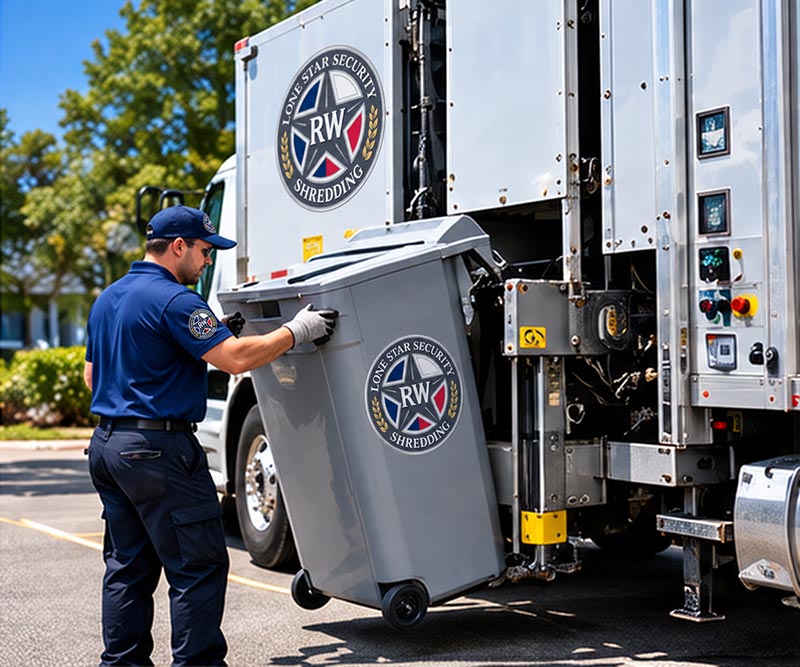
We provide secure containers that employees can use as part of their normal workday. Instead of somebody deciding whether a document should go into the trash, recycling bin, or shred pile, confidential paperwork can go directly into a locked shredding container.
When the scheduled service date arrives, our team empties the containers and destroys the material.
That simple workflow can solve a surprisingly common problem: piles of confidential paper waiting around for someone to deal with them.
Most people focus on the actual shredding machine.
We pay just as much attention to what happens before the documents reach it.
Imagine an employee cleaning out an office and finding six boxes of old customer records. Those boxes should not be left unattended outside a building waiting for pickup. They should remain under controlled custody.
The same principle applies when secure shredding containers are being serviced. Your provider should have a defined procedure for handling material from the moment it leaves your office until destruction is complete.
Ask potential shredding companies questions such as:
- Who handles the material?
- Are employees trained for secure document handling?
- Are containers kept under control during service?
- Is destruction performed on-site or transported somewhere else?
- Will you receive documentation after the service?
Those questions tell you much more about a shredding company than the price printed on a quote.
RW Lone Star Security is NAID Certified for on-site mobile shredding involving paper and printed media, computer hard drives, non-paper media, data tapes, and CD/DVD media. We are also a CVE Certified Service-Disabled Veteran-Owned Small Business.
Those certifications matter because secure destruction should be based on verifiable procedures, not simply a promise that somebody owns a shredder.

On-Site Shredding Lets You See the Process
For many organizations, mobile paper shredding offers an extra level of confidence.
Our mobile shredding trucks perform the destruction at the customer’s location. Secure containers are brought to the truck and mechanically lifted into the shredding system from the side of the vehicle. The documents are destroyed before the truck leaves the property.
That detail matters.
There is a difference between watching your records enter a shredding system in your parking lot and watching a truck drive away with intact documents.
Some organizations are comfortable with secure off-site destruction. Others have internal policies, customer requirements, or security procedures that make on-site destruction the better choice.
We often see this with companies handling personally identifiable information, employee records, medical information, financial information, or sensitive government-related paperwork.
On-site shredding also makes the chain of custody easy for staff to understand. Documents move from the company’s secure container to our employee, then directly to the mobile shredding truck.
Watch for Pricing That Looks Better Than It Really Is
One of the more frustrating situations for customers is receiving one price when they schedule service and another price after the truck arrives.
Ask what the quote actually includes.
Some companies may advertise a low shredding rate but add charges for travel, fuel, service time, stairs, containers, minimum quantities, or other items.
That can make comparing quotes difficult because two companies that appear to have very different prices may actually be much closer once all charges are included.
At RW Lone Star Security, we believe customers should understand what they are paying before service is performed. Our approach includes a No Hidden Fee Guarantee, so customers are not surprised with separate charges for service time, travel time, or fuel expenses.
Price still matters. It just should not be separated from security, reliability, and the actual service being provided.
We talk with plenty of businesses that need shredding but do not want to commit to a long-term service agreement.
That is reasonable.
A small accounting office may need a purge after tax season. A business moving locations might need two large cleanouts this year and nothing next year. Another company may want recurring service but still does not want to be locked into a contract.
We do not believe a contract should be required simply to receive professional service.
Our goal is to earn repeat business by doing the job correctly.
If your shredding needs change, your service should be able to change with them.
A company may start with a quarterly pickup and later move to monthly service because its document volume increases. Another customer may reduce container count after converting more records to digital storage.
Your shredding program should match the business, not force the business to match the shredding schedule.

Do Not Forget About Old Hard Drives
Paper is only part of the information security problem.
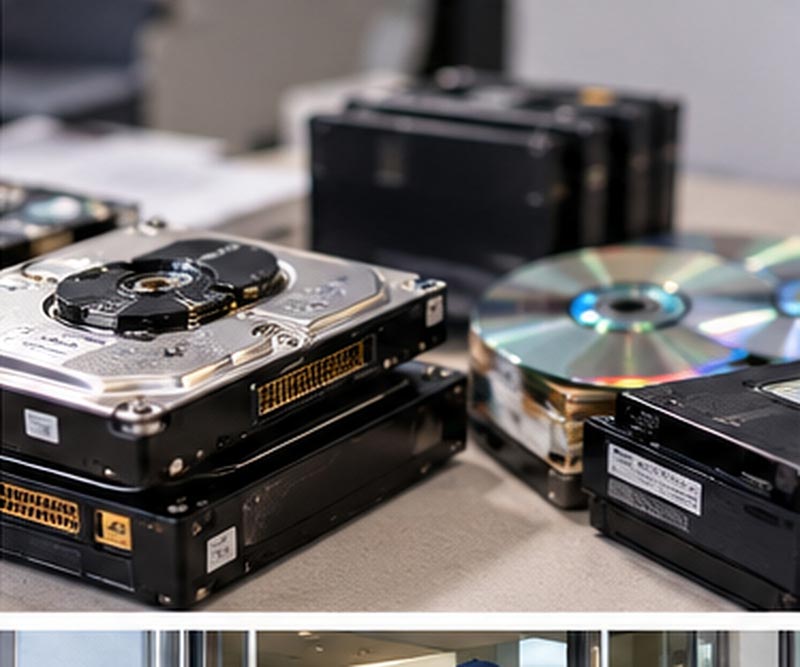
We frequently encounter companies with a shelf, cabinet, or closet full of retired computers and hard drives.
Someone usually says, “The drives were wiped.”
That does not necessarily mean the physical media should be treated like ordinary scrap.
If the drive contained customer records, payroll information, financial information, intellectual property, employee information, or other sensitive data, physical destruction provides a clear endpoint.
Our hard drive shredding service physically destroys the media so the drive can no longer function as a storage device.
This is especially useful during IT upgrades, office relocations, equipment refreshes, or company-wide computer replacements.
A common mistake is focusing heavily on document shredding while allowing retired electronic media to accumulate indefinitely.
A complete information destruction program should address both.
Make Sure You Receive a Certificate of Destruction
Documentation matters, particularly when your business has internal security policies or compliance responsibilities.
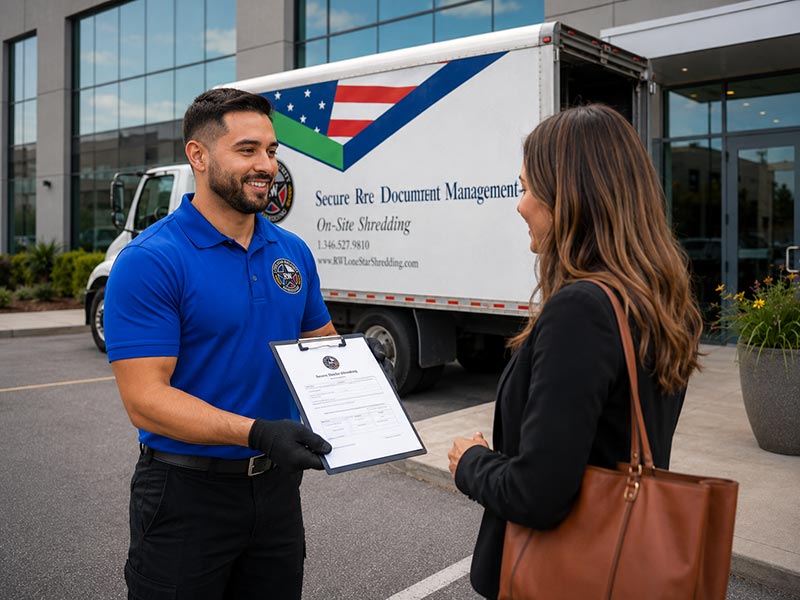
After destruction, customers should receive a Certificate of Destruction confirming that the material was processed.
This provides a record for internal files and can be useful during audits, vendor reviews, compliance reviews, or customer security evaluations.
We have seen situations where a business knows records were “picked up years ago,” but nobody can identify who handled them or provide documentation showing what happened afterward.
Good records remove that uncertainty.
When your shredding provider has a clear process, your own documentation becomes much easier to maintain.
Think About How Employees Will Actually Use the Program
A secure shredding program can look perfect on paper and still fail if it is inconvenient for employees.
Suppose the only secure shredding container is in a records room on another floor.
Employees may start placing documents into recycling bins because it is faster.
If several departments regularly handle confidential paperwork, having secure containers located near those work areas may make more sense.
Placement matters. Container size matters. Pickup frequency matters.
We have customers where one large container works perfectly. Others need several smaller containers spread across accounting, human resources, administration, and other departments.
That is why we prefer to look at actual workflow instead of simply recommending the same program to every company.
A five-person professional office and a large multi-department organization should not automatically receive the same solution.

Ask What Happens to the Paper After Destruction
Secure destruction does not mean shredded paper has to become waste.
Once documents have been securely destroyed and the information is no longer readable, shredded paper can enter the recycling process.
This gives businesses a practical way to protect confidential information while keeping large volumes of recoverable paper out of the waste stream.
For companies working toward sustainability goals, this can be another consideration when selecting a shredding provider.
The important part is the order of operations. Security comes first.
Documents should be securely destroyed before the material is treated as recyclable paper.
What We Look for When Helping a New Customer
When a business contacts RW Lone Star Security, we usually try to understand a few things before recommending service.
How much material do you have?
Is this a one-time cleanout or an ongoing need?
Where is the material located?
Are there stairs, loading areas, security desks, elevators, restricted parking areas, or access procedures we need to know about?
Are you destroying paper only, or do you also have hard drives, tapes, CDs, DVDs, or other media?
Do you need secure containers between visits? Would you prefer to witness the destruction?
Those practical questions help avoid problems on service day.
For example, twenty boxes stored next to the front door are a different job than twenty boxes stored on the fourth floor of a building with controlled elevator access.
The amount of paper is the same. The service requirements are not.
That type of planning is one of the differences between simply sending a truck and building a shredding program that works smoothly.
Choosing a Shredding Company Comes Down to Trust
You are handing a shredding provider information your business has decided is too sensitive to throw away.
That deserves more consideration than simply searching for the cheapest Paper Shredding Service online.
Look at the company’s process, certifications, and how its employees handle your documents. Find out whether destruction occurs at your location, understand the price before scheduling, and ask whether you will receive a Certificate of Destruction.
Think about whether the provider can handle hard drives and other electronic media as well as paper. Most importantly, choose a company you are comfortable allowing into your office and around confidential material.
At RW Lone Star Security, we have built our services around that responsibility for more than 14 years. Whether a customer needs one purge, scheduled monthly service, mobile on-site shredding, or hard drive destruction, our goal is straightforward: protect the information entrusted to us and make the entire process easy for the customer.

Additional Service Locations
RW Lone Star Security provides secure paper shredding, mobile on-site destruction, purge services, scheduled shredding, and hard drive destruction throughout the Austin area. We work with businesses ranging from small professional offices to larger organizations that need dependable recurring document destruction.
RW Lone Star Security serves Waco businesses that need secure document destruction for employee files, customer records, financial paperwork, archived documents, and other confidential material. Service can be arranged as a one-time purge or as an ongoing scheduled shredding program.
Our Dallas-Fort Worth shredding services support businesses with both large document cleanouts and recurring confidential-record destruction. Mobile shredding allows customers to have their documents securely destroyed at their location while maintaining a straightforward chain of custody.
Businesses throughout San Antonio can use RW Lone Star Security for one-time cleanouts, recurring shredding service, mobile document destruction, and secure media destruction. We can help determine the right service frequency and container setup based on how much confidential material your organization actually produces.
FAQ:
In most professional shredding operations, ordinary staples and paper clips do not need to be removed first. This can save employees significant preparation time during large cleanouts.
That depends on the material and shredding equipment being used. We recommend asking us before spending employee time separating large quantities of files that may not require preparation.
Often, yes, but parking and access should be discussed when scheduling. Knowing about loading zones, parking garages, security gates, or tight access areas ahead of time helps us plan the service correctly.
When employees are unsure whether paperwork contains sensitive information, placing it into the secure shredding stream is usually the safer choice. This prevents staff from having to inspect every page before disposal.
Yes. Businesses with departments such as HR, accounting, administration, or customer service often benefit from having secure containers near the areas where confidential paperwork is actually created.
Scheduling options depend on route availability and location. Let us know about customer traffic, security restrictions, loading hours, or other timing concerns when arranging service.
Sensitive electronic and non-paper media should not automatically go into regular trash. RW Lone Star Security can help determine the proper destruction method for the type of media you need to dispose of.